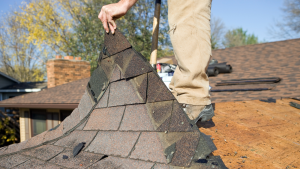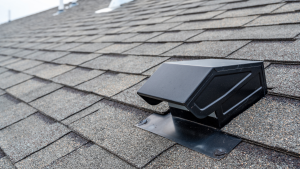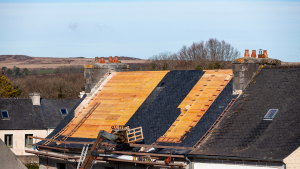


A storm blows through New Kensington, and the next morning you spot shingles in the yard and a dark stain creeping across the ceiling. Now what? Knowing how to file a roof insurance claim the right way can be the difference between a smooth, fully paid job and a denied one. The good news: the process is more manageable than it looks. Here’s the step-by-step, from a family roofer that’s been documenting Western PA storm damage since 1982.
The roof insurance claim process, start to finish
Filing a roof insurance claim means documenting the damage, getting a professional inspection, notifying your insurer promptly, meeting with their adjuster, and reviewing the payout before repairs begin. Move quickly, keep records of everything, and you protect both your home and your right to a fair settlement.
Step 1: Make sure it’s safe, then document everything
Before anything else, stay safe. Don’t climb onto a wet or damaged roof, and steer clear of any sagging ceilings or downed power lines inside.
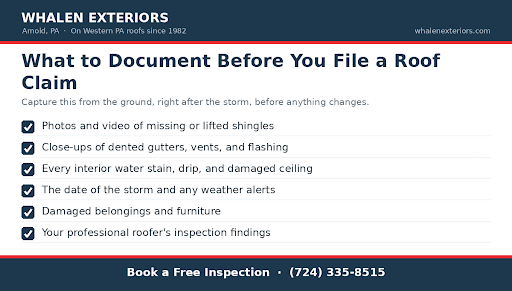
From the ground, take clear photos and video of what you can see: missing shingles, dented gutters, debris, and any water spots indoors. Note the date of the storm. This first record matters, because it captures the damage before weather or time changes anything.
Step 2: Get a professional inspection before you call the adjuster
This is the step most homeowners skip, and it’s the one that helps most. A qualified roofer can safely get on the roof, find damage you can’t see from the ground, and tell you whether it’s a repair or a replacement.
Our free inspection includes drone imagery for steep or hard-to-reach areas and moisture-meter readings that reveal water hiding under the surface. Walking in with that documentation means you know the real scope before the insurance company does. Book yours through our free inspection page or call (724) 335-8515.
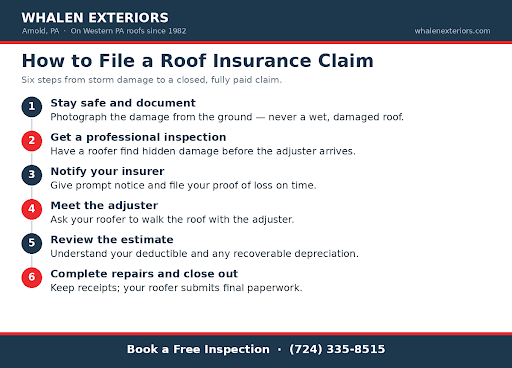
Step 3: Notify your insurer and file your proof of loss
Call your insurance company as soon as you reasonably can. Most policies require “prompt notice,” and waiting can give an insurer a reason to push back.
When you file, you’ll usually submit a proof of loss, a document that states what was damaged and the value of the loss. Pennsylvania’s standard policy language often asks for this within 60 days, so don’t sit on it. Give them your photos, the date of the storm, and your roofer’s inspection findings.
Step 4: Meet the adjuster with your own documentation in hand
Your insurer will send an adjuster to inspect the roof and estimate the damage. Here’s a tip worth its weight in shingles: ask your roofer to be there for that visit.
When a knowledgeable contractor and the adjuster walk the roof together, fewer legitimate damages get missed. It’s not about pressure. It’s about making sure a bruised ridge or a cracked piece of flashing gets counted the first time, instead of turning into an appeal later.
Step 5: Review the estimate and understand recoverable depreciation
Once the claim is approved, you’ll get an estimate and, often, a first check. If you have replacement cost coverage, that first payment may be the actual cash value, which is the total minus depreciation held back.
That held-back amount is called recoverable depreciation, and you usually get it after the work is done and the final invoice is submitted. In other words, part of your payout arrives at the end. Knowing that up front keeps the numbers from surprising you halfway through.
Step 6: Complete the repairs and close out the claim
Choose your contractor, get the work scheduled, and keep every receipt and invoice. When the job is finished, your roofer submits the final paperwork so the insurer can release any remaining funds.
Our 5-step build process keeps this stretch clean: inspection, itemized proposal, prep and tear-off, installation, then cleanup and a final walkthrough with you. On larger jobs we hand off daily progress photos and as-built photos, which double as proof for your file. See how the residential roofing process works from start to finish.
Mistakes that get roof claims denied
A few avoidable slip-ups sink otherwise valid claims:
- Waiting too long to report the damage
- Making permanent repairs before the adjuster sees the roof
- Tossing damaged materials or “before” evidence
- Skipping a professional inspection and under-reporting the scope
- Letting a small, fixable leak sit until it looks like neglect
If you’re unsure whether a leak is storm-related or wear, our post on the common causes of roof leaks helps you tell the difference. And always confirm your contractor is a registered Pennsylvania home improvement contractor before signing.
How Whalen supports you through the claim
We can’t approve your claim, and we’d never promise a specific payout. What we can do is give the process a solid foundation: a free, documented inspection, honest guidance on repair versus replacement, and an itemized proposal customers have called the most professional they’ve seen.
That approach is why we hold a 4.9-star average across 300+ Google reviews, an A+ BBB rating, Owens Corning Platinum Preferred status, and Pennsylvania Home Improvement Contractor license PA-034738. Our crews, folks like Shawn, Chuck, Kenny, and Mike, get named in reviews for treating homes like their own. Read a few on our reviews page, or meet the family behind the company.
Storm damage in Arnold, Murrysville, Natrona Heights, or anywhere across our service area? Book a free inspection and we’ll help you start on the right foot. We handle commercial roofing claims for local businesses too.
Frequently asked questions
How long do I have to file a roof insurance claim? Most policies require prompt notice and set a firm deadline, often as short as one year from the date of loss. The exact window is in your policy. In Pennsylvania specifically, review how long you have to file a roof insurance claim so you don’t miss it.
Should I get an estimate before or after the adjuster visits? Before. A professional inspection and estimate in hand help you spot missed damage and keep the adjuster’s numbers honest. It’s free with Whalen and gives you a baseline to compare against.
Will my insurance cover the whole roof or just a repair? It depends on how widespread the damage is and your coverage type. To understand what typically gets covered, read does homeowners insurance cover roof replacement.
What if my claim is underpaid or the check doesn’t cover the work? First, make sure every legitimate damage was documented and counted. If a gap remains after a fair claim, our financing options can help you cover it without delaying the repair.
The bottom line
Knowing how to file a roof insurance claim comes down to a simple rhythm: document early, get a professional inspection, notify your insurer fast, and keep clean records through the final walkthrough. Do that, and you give yourself the best shot at a fair, fully paid roof.
We’ll take a close look, explain everything clearly, and help you make the best decision for your home. For more guides, browse our blog. Ready to start? Book a Free Inspection or call (724) 335-8515.