

You’re getting ready to list your home in Oakmont or New Kensington, and there’s one thing nagging at you: the roof has seen better days. Selling a house with an old roof raises a real question with real money on the line. Do you replace it before listing, offer the buyer a credit, or sell as-is and let them handle it? There’s no single right answer, but there is a smart way to decide. Here’s how to think it through, from a family roofer that’s been on Western PA roofs since 1982.
The short answer
You have four main paths when selling a house with an old roof: replace it before listing, offer a repair credit at closing, sell as-is to a cash buyer, or document that a sound roof still has life left. The best choice depends on your roof’s real condition, your buyer pool, and your local market, and a pre-listing inspection tells you which path fits.
Why an old roof can quietly stall a sale
Most sellers assume a worn roof just means a lower offer. The bigger risk is subtler, and it kills deals late, after you think you’re home free.
It starts with the appraisal. If an appraiser flags the roof as near the end of its life, they can knock down the home’s value, which leaves a gap between the sale price and what the lender will finance. Then comes insurance. Many carriers won’t write a new policy on a roof past 15 to 20 years, or they’ll only cover its depreciated value. Because a buyer’s lender requires insurance to close, a roof that can’t be insured affordably can sink the whole deal, even after the appraisal clears.
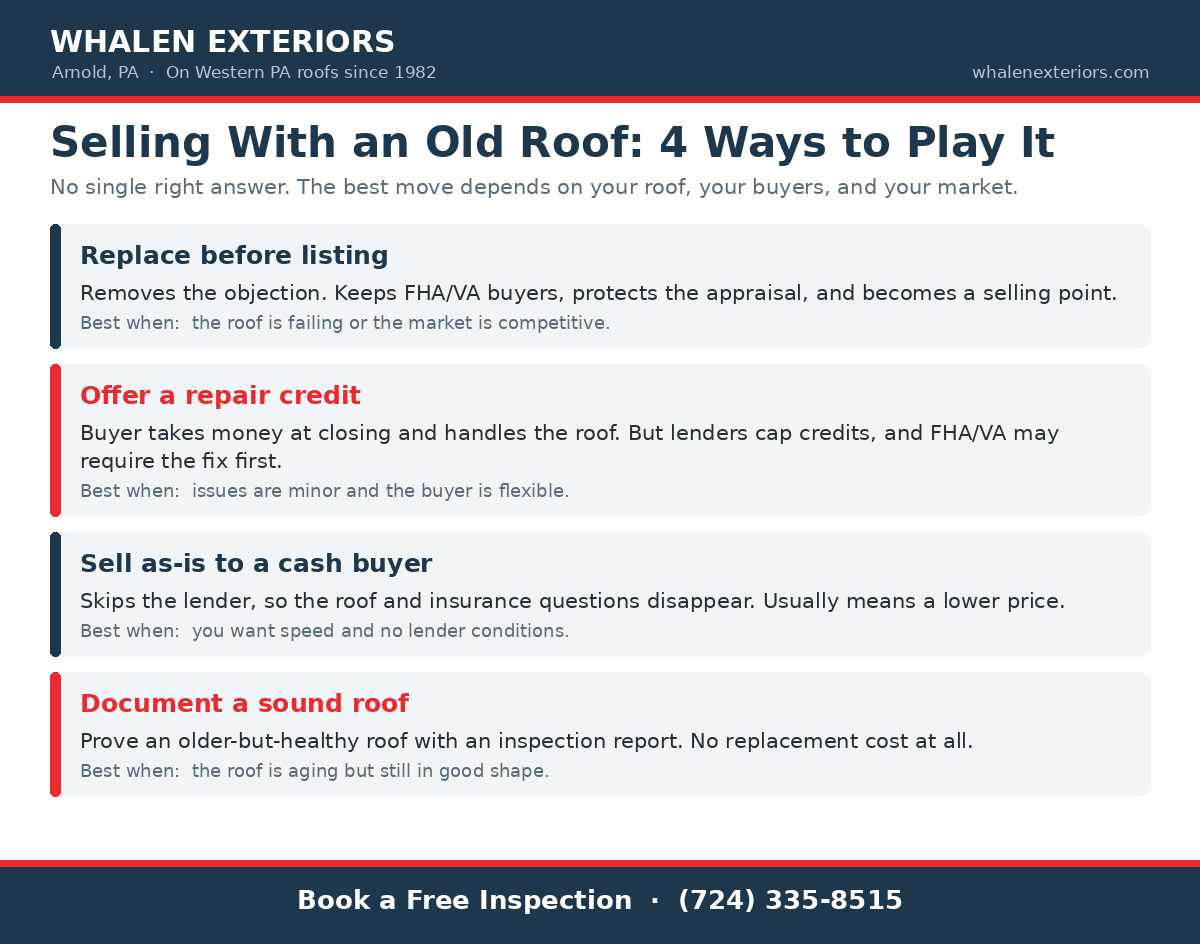
Financing adds one more hurdle. FHA, VA, and conventional loans all have roof-condition standards, and buyers using those loans may not be able to close on a roof that fails them. Put it together and an aging roof shrinks your buyer pool right when you want it widest.
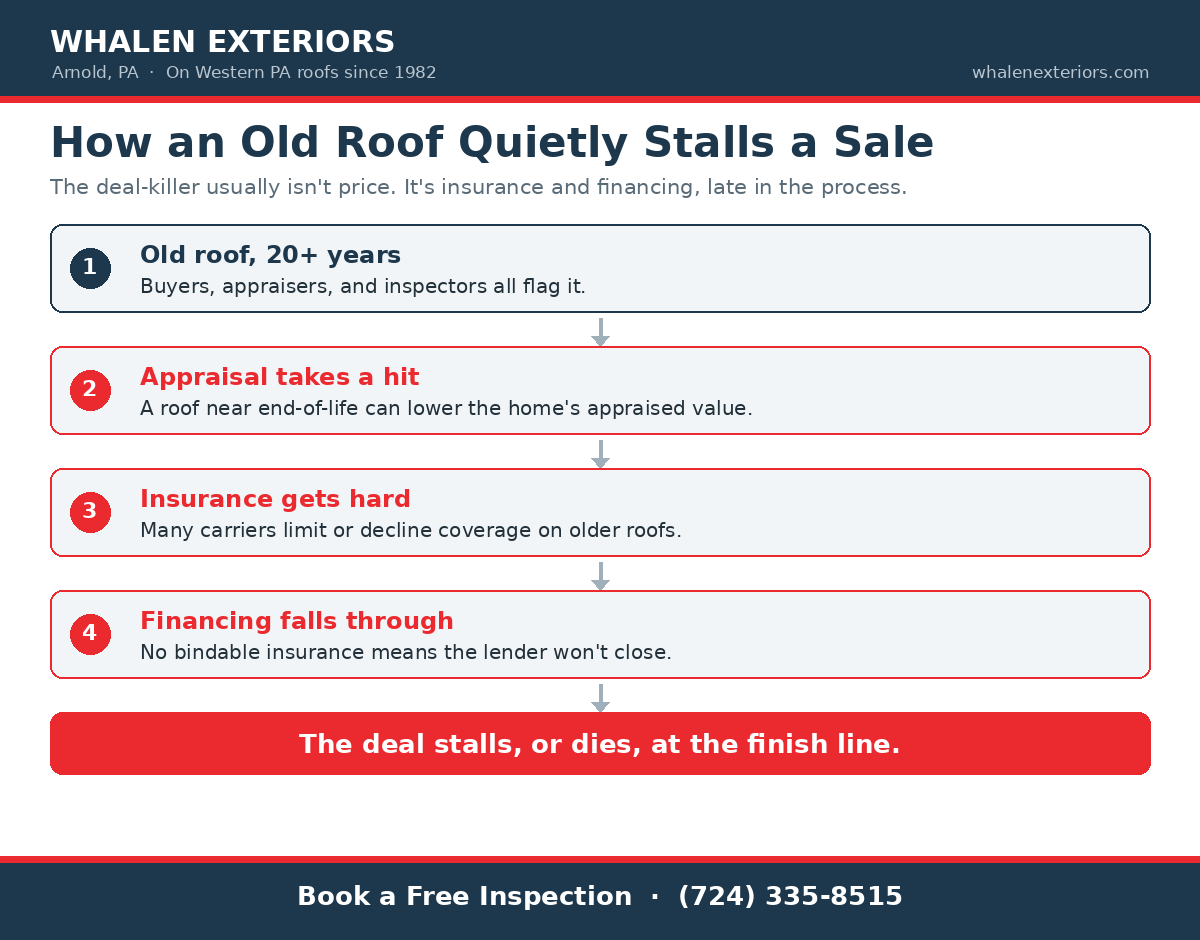
Your four options, laid out honestly
There’s no one-size answer here, so let’s weigh each path.
Replace before listing. This removes the objection entirely. It keeps FHA and VA buyers in the running, takes the insurance question off the table, and strips away the “unknown roof” fear that makes buyers lowball. When a roof is already failing or has active leaks, replacing usually nets more than selling as-is, because you control the cost and the timing instead of negotiating from the weak spot. A new roof also becomes a genuine selling point, especially with a transferable manufacturer warranty.
Offer a repair credit. Here the buyer takes money at closing and handles the roof themselves. It’s popular, but watch two catches: a financed buyer’s lender caps how large a credit can be, and an FHA or VA appraiser may require the roof fixed before closing, which takes the credit option off the table.
Sell as-is to a cash buyer. This removes the roof and insurance questions completely, since cash deals skip the lender and its requirements. The trade-off is usually a lower price, because cash buyers price the roof risk into their offer.
Document a sound roof. If your roof is older but still in good shape, sometimes the answer is simply to prove it. A dated, professional inspection report reassures buyers, appraisers, and their insurers without spending a dime on replacement.
What Pennsylvania requires you to disclose
Whatever path you choose, you can’t hide a known problem. Pennsylvania’s Real Estate Seller Disclosure Law requires most home sellers to complete a Seller’s Property Disclosure Statement, and the standard state disclosure form specifically asks for the date the roof was installed, along with any known leaks, repairs, or issues.
The rule is straightforward: disclose known material defects that aren’t obvious to a buyer. If you truly don’t know the roof’s age, you can answer “unknown,” but you can’t conceal a leak you’ve been catching in a bucket. We’re roofers, not attorneys or real estate agents, so treat this as a starting point and confirm the specifics with your agent or a lawyer. For your rights and duties, the Pennsylvania Attorney General’s home improvement resources are a solid, non-commercial reference.
How much does a roof help your sale?
A new roof rarely returns dollar-for-dollar on paper, but its real value is in what it removes: appraisal deductions, insurance roadblocks, financing snags, and buyer hesitation. In a competitive market it helps you stand out; in a slower one it can be the difference between an offer and a pass. We dig into the numbers in our post on whether a new roof increases home value.
The first step, no matter which way you lean, is knowing exactly what you’re working with. Book a free, no-pressure pre-listing inspection or call (724) 335-8515, and we’ll tell you honestly whether your roof needs replacing or just a good report.
How Whalen helps sellers
Our job here is to give you facts, not push a replacement. We’ll walk the roof, use drone imagery for steep areas and moisture-meter readings to check for hidden water, and hand you an itemized, plain-language report you can share with buyers and agents. If a repair will get you to closing, we’ll say so.
If you do replace, we back full roof systems with a lifetime workmanship warranty, and we’ll document the job with as-built photos that make a strong listing detail. That honest approach is why we’ve earned a 4.9-star average across 300+ Google reviews, an A+ BBB rating, Owens Corning Platinum Preferred status, and license PA-034738. Crews like Shawn, Chuck, Kenny, and Mike get named in reviews for treating homes like their own. Read a few on our reviews page or meet the family behind Whalen, and see our full residential roofing work.
We help sellers across Arnold, New Kensington, Oakmont, Fox Chapel, Murrysville, and the rest of our service area.
Frequently asked questions
Should I replace my roof before selling my house?
It depends on the roof and your buyer pool. If the roof is failing, leaking, or blocking insurance and financing, replacing before listing often nets more and keeps FHA and VA buyers in play. If it’s simply older but sound, a documented inspection may be enough.
Can I sell a house with an old roof as-is?
Yes. Selling as-is, often to a cash buyer, removes the roof and insurance questions because there’s no lender requiring coverage. The trade-off is usually a lower price, since the buyer prices the roof risk into their offer. Get an inspection first so you know what you’re giving up.
Do I have to disclose a bad roof when selling in Pennsylvania?
Generally, yes. Pennsylvania’s seller disclosure law requires you to reveal known material defects, and the standard form asks for the roof’s install date and condition. You can answer “unknown” if you truly don’t know, but concealing a known leak can create liability. Confirm details with your agent or attorney.
Is a repair credit better than replacing the roof?
ometimes, but it has limits. A credit lets the buyer handle the work, yet lenders cap credit size, and FHA or VA appraisers may require the roof fixed before closing. Whether a credit or a replacement nets more depends on your buyer and price, so it’s worth running both.
The bottom line
Selling a house with an old roof isn’t about panic, it’s about a clear-eyed choice among replace, credit, as-is, or document. The wrong move can stall a sale at the finish line; the right one keeps your buyer pool wide and your price protected. Start by knowing exactly what your roof is worth to the deal.
If you’re on the buying side of this instead, read our guides on how to tell the age of a roof and getting a roof inspection before buying. For more, visit our blog. We’ll take a close look, explain everything clearly, and help you make the best decision for your home. Book a Free Inspection or call (724) 335-8515.